
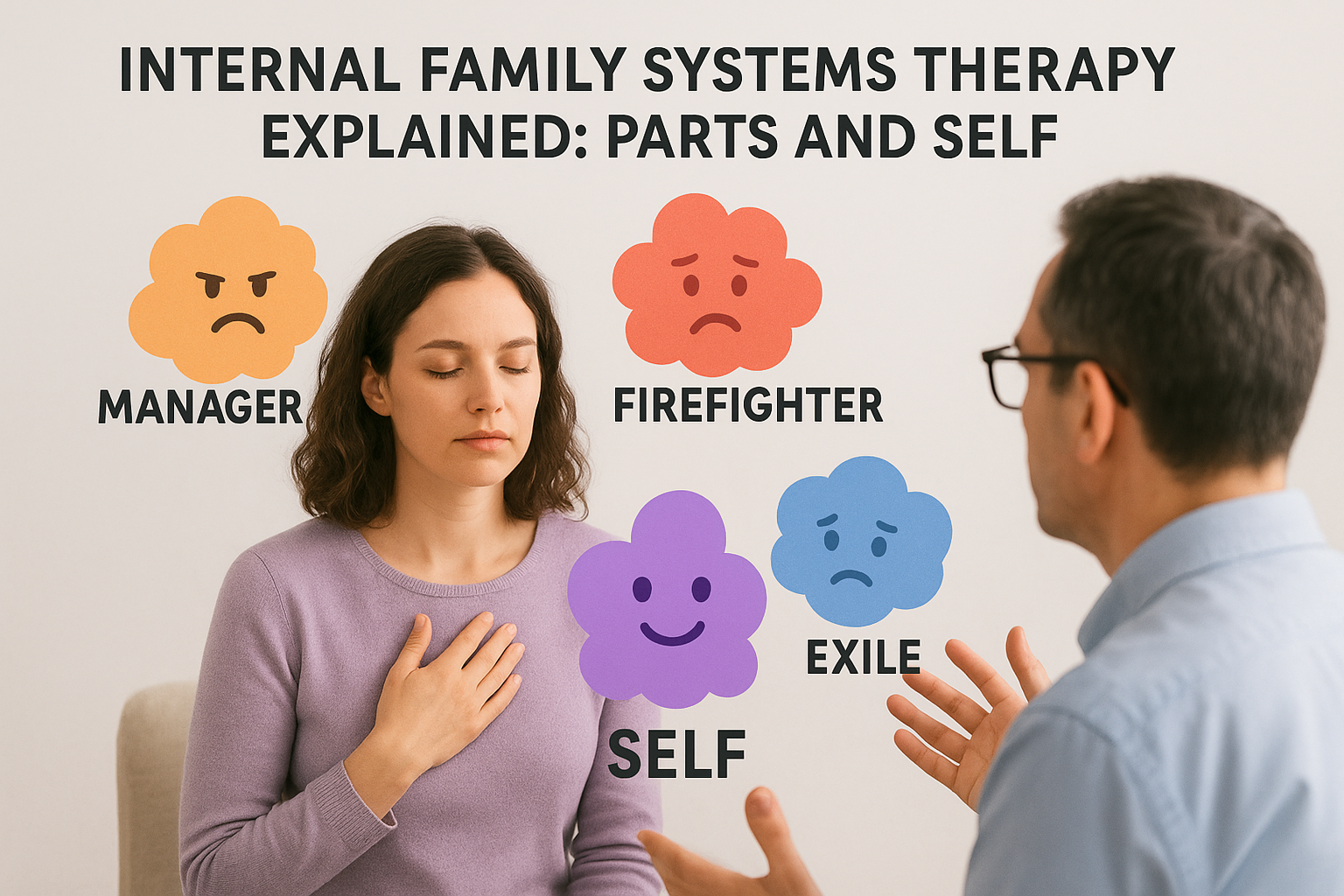
Internal Family Systems Therapy Explained: Parts And Self
You’ve probably noticed how different situations bring out different sides of yourself. One moment you’re confident and decisive, the next you’re overwhelmed by self-doubt or an urge to avoid something entirely. These aren’t signs of inconsistency, they’re evidence of your internal system at work. Internal Family Systems therapy explained in simple terms offers a framework for understanding these inner dynamics and, more importantly, for healing from trauma and emotional pain.
IFS therapy operates on a core principle: your mind naturally contains multiple “parts,” each with its own feelings, perspectives, and motivations. Some parts protect you from pain, while others carry the wounds themselves. At the center of this system sits what IFS calls the Self, your core identity that holds qualities like curiosity, compassion, and calm.
At Trellis Counseling, we use IFS alongside other evidence-based approaches like EMDR to support trauma recovery for teens and adults across Oregon. This guide breaks down how IFS works, the different types of parts you’ll encounter, and what healing through this model actually looks like. Whether you’re considering therapy or simply want to understand your inner world better, you’ll find practical insight here.
What internal family systems therapy is
Internal Family Systems therapy is a psychotherapy model that treats your mind as a collection of distinct sub-personalities, or “parts,” rather than a single unified self. Developed by psychologist Richard Schwartz in the 1980s, this approach emerged from his work with clients who described internal conflicts as conversations between different aspects of themselves. Instead of dismissing these experiences as metaphors, Schwartz recognized them as literal components of human consciousness.
The foundation of the IFS model
The therapy operates on the belief that everyone is born with these parts, and they develop specific roles based on your life experiences. When you face trauma or emotional pain, certain parts take on protective responsibilities to shield you from further hurt. Unlike traditional therapy models that view symptoms as problems to eliminate, IFS treats these parts as well-intentioned protectors who adopted extreme strategies when you needed them most.
Your parts aren’t random or chaotic. They form an organized internal system with clear patterns and relationships, similar to how family members interact with defined roles. Some parts may conflict with others, some work together, and some remain hidden until conditions feel safe enough for them to emerge. This structure explains why you might feel torn between competing desires or why certain situations trigger responses that seem disproportionate to the actual threat.
Internal Family Systems therapy explained through this lens reveals that healing doesn’t mean eliminating parts, but rather helping them trust that you no longer need their extreme protective measures.
How IFS differs from other approaches
Traditional therapy often focuses on changing thoughts or behaviors directly, treating symptoms as the primary target. IFS takes a different path by addressing the underlying parts that generate those symptoms. When you understand that your anxiety, for example, comes from a part trying to keep you safe, you can work with that part rather than against it.
The model also shifts the therapist’s role. Your therapist acts as a guide who helps you access your own internal wisdom, rather than an expert who provides solutions. This approach respects your inherent capacity to heal when given the right conditions and support.
The core premise of multiplicity
IFS challenges the Western cultural assumption that you should have one consistent personality. Research in neuroscience and developmental psychology increasingly supports what IFS practitioners have observed: the human mind naturally subdivides into parts as a normal function of consciousness. You don’t have to have a mental health diagnosis or trauma history for this model to apply to you.
This multiplicity serves adaptive purposes throughout your life. Different situations genuinely require different responses, and your parts allow you to access the specific qualities each moment demands. The problems arise not from having parts, but when parts become stuck in extreme roles they adopted during difficult periods and can’t update their strategies as your circumstances change.
The parts in IFS: managers, firefighters, exiles
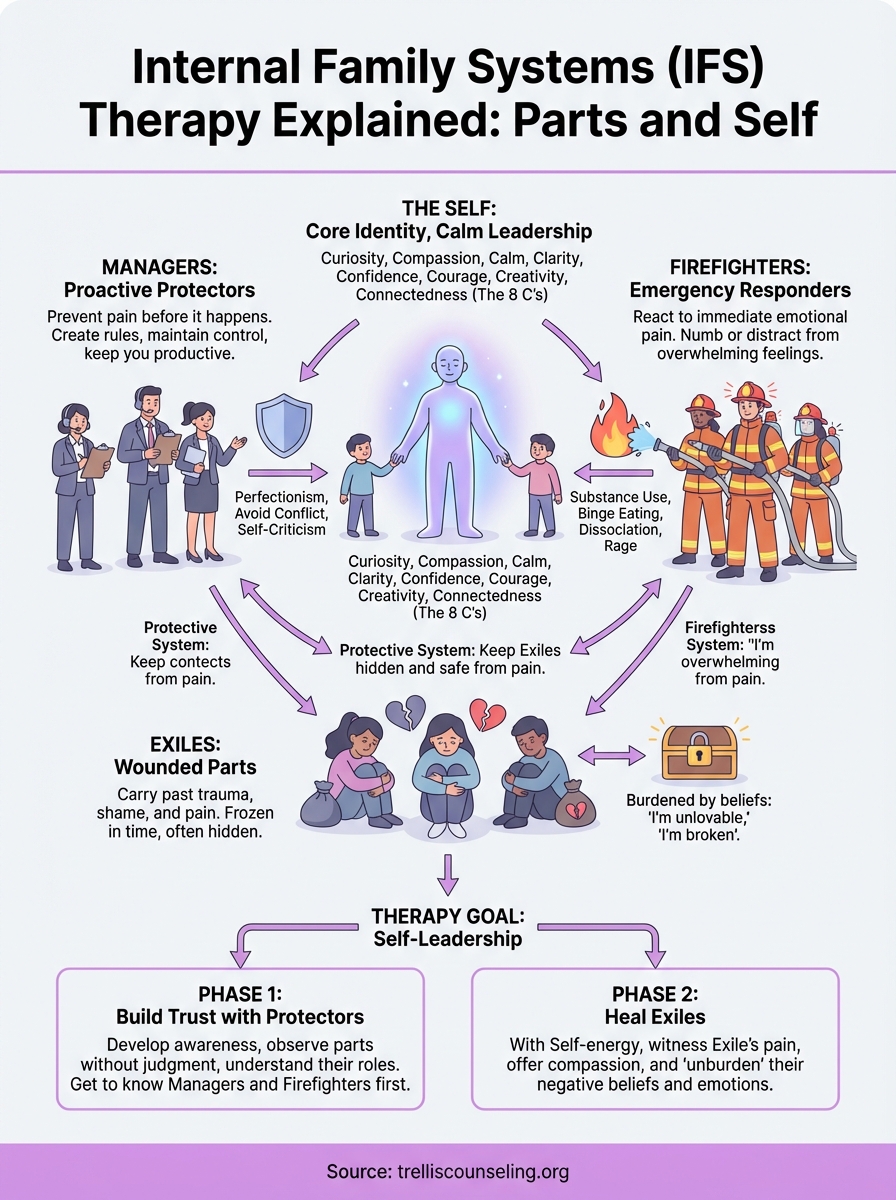
Internal Family Systems therapy explained through its three-part framework reveals how your protective system operates. Each part type serves a specific function in your psychological defense network, and understanding these roles helps you recognize patterns that may have confused you for years. Your parts didn’t choose their jobs randomly; they responded to circumstances that shaped your emotional survival strategies.

Managers: your proactive protectors
Managers work to prevent pain before it happens. These parts control your daily functioning by organizing your life, maintaining relationships, and keeping you productive. They create rules and expectations that feel like they’ll keep you safe from rejection, failure, or vulnerability.
You encounter managers when you feel driven to perfect every detail of a project, when you avoid conflict to keep everyone happy, or when you criticize yourself before others can. Your manager parts believe that if they maintain tight control over your behavior and environment, the vulnerable parts of you (the exiles) will never get hurt again. While their intentions protect you, their methods can become exhausting and rigid.
Firefighters: your emergency responders
Firefighters activate when pain breaks through despite your managers’ efforts. Unlike managers who work proactively, firefighters react to immediate emotional emergencies with whatever strategy will numb or distract from overwhelming feelings. These parts don’t care about long-term consequences because they’re focused solely on extinguishing the fire of distress right now.
Common firefighter strategies include substance use, binge eating, compulsive shopping, or dissociation. You might also recognize firefighters in sudden rage outbursts or the impulse to isolate completely. These parts genuinely believe they’re saving you from unbearable pain, even when their methods create additional problems.
Exiles: the wounded parts you protect
Exiles carry the burdens of past trauma, shame, and pain that your protectors work so hard to keep locked away. These parts often freeze at the age when the original wounding occurred, holding memories and emotions too overwhelming for you to process at the time.
Your exiles desperately want to be seen and healed, but your protective parts fear that accessing them will flood you with unbearable feelings.
Exiles hold beliefs like “I’m unlovable” or “I’m fundamentally broken.” Your managers and firefighters developed their strategies specifically to keep these exiles from being triggered, which is why healing requires helping all parts trust that you can now handle what once felt impossible to face.
The Self: the calm leader inside you
While your parts carry specific emotions and protective strategies, your Self represents something fundamentally different. The Self isn’t another part with its own agenda; it’s your core essence that exists beneath all the protective layers. When you access your Self, you experience qualities like curiosity about your parts rather than judgment, compassion instead of criticism, and calm even when exploring difficult emotions.
Richard Schwartz observed that when clients separated from their protective parts, they consistently demonstrated the same core qualities. These weren’t learned behaviors or therapeutic techniques; they emerged naturally when parts stepped back enough to let the Self lead. Your Self doesn’t need training or development because you were born with it, though your parts may have learned to obscure it when they decided protection mattered more than presence.
Qualities of Self-energy
Internal Family Systems therapy explained through the lens of Self identifies eight core qualities, often remembered through the “8 C’s”: curiosity, calm, clarity, compassion, confidence, courage, creativity, and connectedness. When you operate from Self, you ask genuine questions about your parts’ fears rather than trying to force them to change. You feel spacious enough to hold multiple perspectives simultaneously without getting overwhelmed by any single emotion.
Your Self can handle what your parts fear will destroy you, which is why healing becomes possible when Self takes the leadership role in your internal system.
This energy feels distinctly different from your parts’ voices. Parts speak with urgency, fear, or criticism; Self speaks with curiosity and compassion. Parts push you toward specific actions; Self creates space for understanding. You can recognize when your Self is present because you’ll notice a quality of openness that allows you to be with difficult experiences without immediately trying to fix, avoid, or control them.
Accessing your Self in daily life
You don’t need to eliminate your parts to access Self; you need to help them trust you enough to step back temporarily. This happens naturally in moments when you feel genuinely curious about your own reactions rather than judged by them. When you notice yourself getting defensive and pause to wonder “which part of me feels threatened right now?” you’ve moved into Self-energy.
Your parts will resist this shift initially because they’ve spent years believing their vigilance keeps you safe. Building trust with your protectors allows them to relax their grip gradually, creating more frequent access to the calm leadership your Self provides.
How IFS therapy works in real sessions
Your first IFS session doesn’t start with diving into trauma or forcing immediate emotional breakthroughs. Instead, your therapist helps you develop awareness of your parts and learn to observe them without getting overwhelmed. This process builds the foundational skills you’ll need throughout therapy: noticing when a part has taken over your consciousness, creating space between your Self and your parts, and establishing curious rather than reactive relationships with different aspects of yourself.
The initial phase: meeting your parts
You begin by identifying which parts show up most frequently in your daily life. Your therapist asks questions like “What comes up when you think about that situation?” or “How do you feel toward that part right now?” These questions help you recognize parts as separate from your Self rather than as who you fundamentally are.
When a manager part resists the therapeutic process, your therapist doesn’t push past it. Instead, they help you understand what that part fears will happen if it relaxes its control. This respect for protective parts builds trust across your entire system, making deeper work possible. You might spend several sessions just getting to know your managers and firefighters before ever approaching an exile.
Working with protectors first
Internal Family Systems therapy explained through its clinical process reveals why protectors always come first. Your therapist helps you develop relationships with the parts that guard your exiles, asking for their permission and cooperation before accessing wounded parts. This prevents the flooding that many trauma survivors have experienced in other therapeutic approaches.
Your protectors need to trust that you can handle what the exiles carry before they’ll step aside, which is why healing happens at your system’s pace rather than a predetermined timeline.
Unburdening exiles and integration
Once your protectors feel safe, you can approach exiles with Self-energy leading. Your therapist guides you to witness what these younger parts experienced, offer them the compassion and protection they needed at the time, and help them release the burdens (beliefs and emotions) they’ve carried. This “unburdening” allows exiles to update their understanding of your current reality, which naturally reduces your protectors’ need for extreme strategies.

Who IFS can help and when to use care
Internal Family Systems therapy explained through its clinical applications shows remarkable versatility across different mental health concerns. The model adapts to various needs because it works with your natural psychological structure rather than imposing external frameworks. You don’t need a specific diagnosis or trauma history to benefit from IFS, though certain conditions respond particularly well to this parts-based approach.
Who benefits from IFS therapy
IFS proves especially effective for trauma survivors who carry complex wounds from childhood abuse, neglect, or repeated relational harm. The model’s respect for protective parts prevents retraumatization while allowing deep healing work. You’ll find this approach valuable if you struggle with PTSD symptoms, dissociation, or emotional flashbacks that traditional talk therapy hasn’t fully addressed.
People dealing with anxiety and depression often discover that IFS reveals underlying parts dynamics that medication or cognitive strategies alone don’t resolve. Your anxious parts may be managers working overtime to prevent abandonment, while depressed parts might be exiles carrying hopelessness from earlier experiences. The therapy also helps with eating disorders, substance use concerns, and relationship patterns that feel stuck despite your best efforts to change them.
You can access IFS therapy whether you’re dealing with longstanding trauma or simply want to understand the internal conflicts that shape your daily decisions and emotional responses.
When to proceed with caution
You need stable external circumstances before engaging in deeper IFS work. If you’re currently in an unsafe living situation, experiencing active domestic violence, or lacking basic resources, your protectors accurately assess that survival takes priority over internal exploration. Your therapist should address these practical concerns first or work with IFS in a more supportive, stabilizing way.
Severe dissociative disorders require specialized clinical judgment about pacing and approach. While IFS can help with dissociation, parts work needs careful containment when you experience significant memory gaps or identity confusion. Active suicidal ideation or acute psychosis also require crisis stabilization before parts-focused therapy begins. Your therapist at Trellis Counseling will assess your readiness and adjust the approach to match your current capacity for internal work.
Next steps
Understanding internal family systems therapy explained through its core concepts gives you a foundation, but reading about parts differs significantly from experiencing the actual therapeutic work. Your protective system needs to feel the safety that comes from working with a trained IFS therapist who understands how to respect the pace your parts set and build trust throughout your internal system.
You can start exploring your parts on your own by simply noticing when you shift between different emotional states throughout your day. Ask yourself “Which part of me is speaking right now?” when you notice strong reactions or internal conflicts. This practice builds the self-awareness that makes therapy more effective, though you’ll always need professional guidance to work safely with exiles or address significant trauma.
If you’re ready to begin IFS therapy or want to learn whether this approach fits your specific needs, Trellis Counseling offers trauma-informed IFS therapy for teens and adults throughout Oregon. Our therapists combine IFS with other evidence-based approaches like EMDR to support your healing journey at a pace that honors your protective parts.